
How to See Pelicans on Skadar Lake, Montenegro
- Skadar Lake
- Pelicans
- Birdwatching
Plan a pelican-watching trip on Skadar Lake with advice on timing, boat routes, respectful wildlife viewing, and departures from Virpazar.
How to see pelicans on Skadar Lake
A pelican lifting off from Skadar Lake is a sight worth slowing down for. First comes the powerful run across the water, then the broad wings rise, and a surprisingly graceful bird glides above the lake. Even a distant view can become the moment you remember most from Montenegro.
At Noah’s Ark Boat Tours, our family-run team welcomes guests in Virpazar for trips aboard traditional wooden boats and the only fast sport boats available here. If pelicans are your priority, tell us before booking: timing, route flexibility, and a patient approach matter more than simply covering distance.
Here is how to plan a rewarding trip while giving these remarkable wild birds the space they need.
Which pelicans live on Skadar Lake?
Skadar Lake is home to the Dalmatian pelican, one of the world’s largest flying birds. Look for its massive pale body, long bill with a pouch underneath, and broad wings. Through binoculars, adults may also show the tousled feathers at the back of the head that give them a distinctive silhouette.
The lake’s shallow feeding areas, wetlands, and quieter resting places provide important habitat. However, pelicans do not remain in one convenient viewing location. They move according to food, water levels, weather, disturbance, and the breeding cycle.
A boat trip offers an opportunity, not a guaranteed sighting. A responsible operator should never promise a close encounter or approach a nesting area to deliver one.
Pelicans are also only part of the experience. Depending on the season, you may encounter cormorants, herons, egrets, and other waterbirds. Our Skadar Lake birdwatching guide offers a broader introduction to watching wildlife here.
When is the best time to look for pelicans?
Choose the season with realistic expectations
There is no single date that guarantees pelicans. Seasonal movements and breeding activity influence where birds gather, while changing lake conditions affect which areas boats can comfortably visit.
Spring can be rewarding for birdwatching, with plenty of activity across the wetlands. It is also a sensitive period around nesting birds, so protected areas and viewing distances deserve particular attention.
Summer brings easy holiday planning and opportunities to combine wildlife watching with swimming. On busy, hot days, an earlier departure can make the experience calmer. Autumn and winter can also provide interesting birdwatching, although weather and operating conditions require more flexibility.
Ask about recent observations shortly before your visit. Current local information is more useful than assuming a photograph taken last year shows where pelicans will be today.
Start early when possible
Early morning is often a good choice because there may be less boat traffic, softer light, and calmer conditions. None of these guarantees a sighting, but they can make distant birds easier and more pleasant to observe.
Our private sunrise cruise is worth considering if you enjoy a quiet start and time on the water before the busiest part of the day.
Late afternoon can also offer beautiful viewing conditions. Remember that sunset scenery and optimal wildlife visibility are not always the same thing: once the light fades, identifying distant birds becomes harder.
Which boat routes give you the right opportunities?
Look beyond a fixed pelican spot
The best approach is to discuss recent sightings and choose an itinerary with suitable viewing opportunities, rather than chasing a named location. Open-water edges, shallow feeding areas, and undisturbed resting places may be productive, but their usefulness changes.
Some important pelican habitats are protected or unsuitable for ordinary sightseeing access. Seeing birds must never mean entering restricted areas or approaching a breeding colony. Your skipper should follow current park rules and adjust the trip to conditions.
For guests with limited time, a two-hour private adventure offers a more personal setting for discussing wildlife interests. Make clear that pelicans are your priority, and ask whether the available route and current observations make it a sensible choice.
Allow time for watching, not just travelling
A longer outing can provide more opportunities to scan different habitats and pause without rushing. Our four-hour private Poseljani, waterfalls and birdwatching tour is an option for travellers who want birdwatching within a broader lake experience.
More time does not automatically mean more pelicans. A birdwatching itinerary still depends on where wildlife is present and where access is permitted.
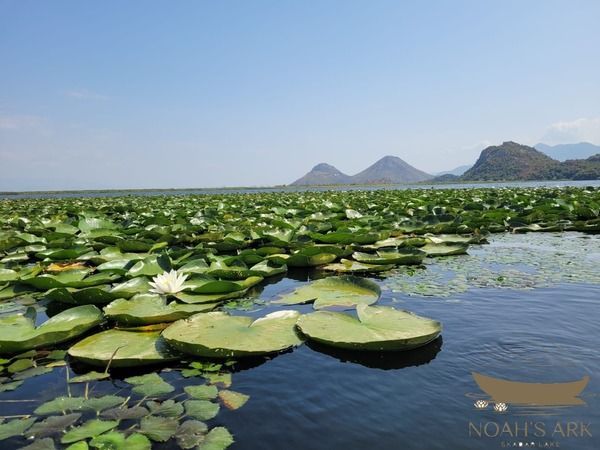
Lily-filled channels are wonderful for scenery and smaller wildlife, but they should not be treated as a guaranteed pelican route. If these large birds are your main goal, choose with habitat and current conditions in mind, not photographs alone.
How to watch pelicans respectfully
A good encounter leaves the birds behaving naturally. Resting pelicans should be able to keep resting; feeding birds should be able to continue feeding.
Follow these simple principles:
- Let the skipper control the approach. Do not ask to move closer simply for a phone photograph.
- Keep voices low and avoid sudden movements when birds are nearby.
- Never feed wildlife or throw food scraps into the lake.
- Stay away from nests and colonies, even if no barrier is visible.
- Do not launch a drone near birds. Disturbance and local restrictions must take priority over aerial footage.
- Use binoculars or a zoom lens instead of reducing the viewing distance.
Repeated head-turning, alert postures, or birds moving away may indicate disturbance. Backing off is the right response. A pelican taking flight because a boat got too close is not a successful wildlife encounter.
What to bring on your boat trip
You do not need specialist equipment to enjoy the lake, but a few essentials help:
- Binoculars, ideally one pair between no more than two people.
- A camera with a zoom lens, if photography is important to you.
- Sun protection, a hat, and a light windproof layer.
- Comfortable footwear and a waterproof pouch for electronics.
- Swimwear and a towel during swimming season.
For photographs, capture the pelican within its landscape as well as trying for detail. Mountains, reflections, and open water can make a distant sighting feel more memorable than a heavily cropped close-up.
Every Noah’s Ark tour includes montenegrin drinks, free private parking, a digital guidebook, and at least one swim stop during the season. Swimming takes place separately from wildlife watching, in an appropriate location. Read our Skadar Lake swimming advice when planning what to pack.
Plan your departure from Virpazar
Give yourself time to arrive without rushing, especially during the busiest holiday months. Check our free parking and arrival information before setting off, and tell us in advance about your wildlife interests.
For a full day around Virpazar, you can also add an independent ride before or after your cruise. Our e-Bike rental in Virpazar starts from 10 EUR/hour and includes a lock, helmet, safety instructions, a recommended route, and emergency pickup. A bag and pump are available on request.
Browse all our boat tours to compare experiences, then check the live availability calendar and book online on our site. If pelicans are the main reason for your visit, contact us before choosing your departure.
For recommended further reading, explore The ultimate Skadar Lake travel guide, Skadar Lake boat tour, and Skadar Lake boat tours (skadarlake.me) for additional trip-planning inspiration.
Frequently asked questions
Are pelican sightings guaranteed on Skadar Lake? No. Pelicans are wild birds, and their locations change. Recent observations, suitable conditions, and a flexible itinerary can help, but no responsible operator can guarantee a sighting.
Is a private boat better for watching pelicans? A private trip can offer more flexibility to discuss your interests and spend time observing where conditions allow. It does not provide permission to enter protected areas or approach birds more closely.
Can we combine pelican watching with swimming? Yes, during swimming season. Every Noah’s Ark tour includes at least one seasonal swim stop, with swimming kept separate from sensitive wildlife areas. Tell us your priorities so we can help you choose a suitable trip.